Listen at the right moment: Integrating Zoho SalesIQ with Zoho Survey

Do you believe luck has a place in the success of a business?
It's a question worth sitting with. Because if you examine the businesses that seem to be lucky, the ones that always seem to reach the right prospect at the right moment, you'll notice their luck isn't random at all. It's engineered.
Here's a definition worth adopting: luck in business is asking the right questions, at the right time, in the right place.
The right questions: Knowing exactly what to ask your prospects and customers
The right time: Knowing precisely when to ask it
The right place: Reaching them wherever they're most comfortable engaging with you
That's the whole idea behind bringing Zoho SalesIQ and Zoho Survey together. When your visitor intelligence and your feedback engine talk to each other, you stop waiting for luck and start making your own.
In this blog, we'll walk through six use cases that show you exactly how, spanning the full customer journey: from the moment someone lands on your website all the way through retention and advocacy.
First, a quick refresher on the products.
What is Zoho SalesIQ?
Zoho SalesIQ is a customer engagement platform that combines visitor intelligence, live chat and chatbots, and an extensive reporting module, built for businesses of any type and size. It breaks down the silos between your marketing, sales, and support teams so they can deliver a uniform customer experience across every touchpoint.
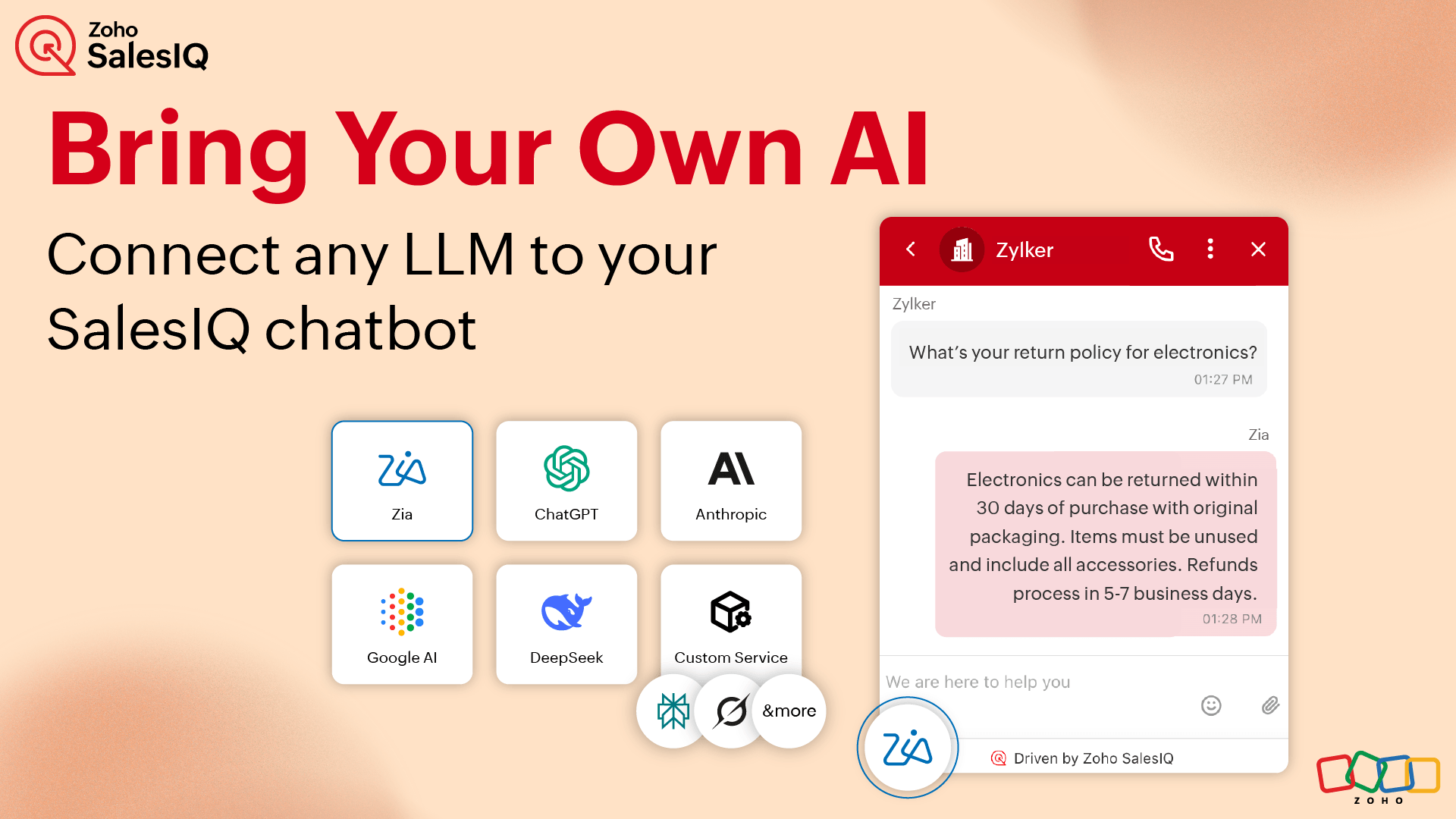
It connects to major messaging and social channels (WhatsApp, Instagram, Facebook Messenger, Telegram, LINE, and WeChat), integrates with the rest of your stack (Marketing automation, CRMs, help desks, analytics, and more), and is powered by AI: Zoho's own Zia or your own external/self-hosted LLM of choice.
What is Zoho Survey?
Zoho Survey is Zoho's feedback and survey platform for designing, distributing, and analyzing surveys—the engine that lets you ask the right questions and capture structured responses at every stage.
How do SalesIQ and Survey work together?
Individually, each product solves a big chunk of your engagement challenges. Put them together, and something more powerful happens: you can automate contextual feedback across the entire customer journey. Here's what that looks like in practice.
SalesIQ-Survey integration use cases
Use case 1: Convert hot leads
For most businesses, the website is the single biggest source of leads. The traffic numbers might look healthy from the outside, but do you actually know what's happening underneath?
Left alone, a website tells you nothing. Put on the "magical goggles" of SalesIQ, and suddenly you can see who's on your site right now, what they're doing, where they're from, and how long they've been browsing.
The mistake most businesses make is treating every visitor the same. They're not the same, so they shouldn't be treated equally. With visitor tracking and lead scoring, you can feed in your ideal customer profile (ICP), and SalesIQ automatically surfaces your high-intent prospects. You can even assign negative scores for actions your ICPs typically don't take, sharpening the signal further.
Now, instead of an anonymous crowd of visitors, you have a scored list of people ready to convert. So what's next?
Rather than waiting for them to reach out, reach out to them with proactive chat: either a plain proactive message or a rich web template from SalesIQ's media template library. Once they're engaged, don't guess what they want. Ask.
That's where Zoho Survey comes in.
Share a survey to understand exactly what they're looking for. Here's the key difference between pasting a survey link versus using the integration: a plain link opens in a new tab, and every time you move a prospect from one place to another, you lose some to drop-off. With the integration, the survey loads as an iframe right inside the chat widget, which means no new tab, no drop-off, and higher completion.
Once the survey is submitted, the responses are automatically pushed to your CRM alongside the full visitor-tracking history from SalesIQ, so your sales team can prioritize and personalize.
Note: SalesIQ integrates directly with Zoho CRM, Bigin, and Zendesk and connects to any other CRM via webhooks.
Can a team do all of this manually, 24/7, at scale?
Not realistically, especially for an SMB. So you automate it: using the Survey card in SalesIQ's codeless bot builder (an upcoming feature), a bot can watch visitor behavior, compare it against your ICP, and automatically trigger a qualification survey when there's a match. There's no human required, and you still capture everything you'd want to know about your hottest prospects.
Natural industry fit:
B2B SaaS and high-ticket software: When the buying cycle is long and sales-led, your website is your pipeline. Score visitors against your ICP, and the accounts actually worth your team's time rise to the top. Because the survey already told you what they're after, your reps open with something warm and relevant instead of a cold "just checking in."
Real estate and high-value considered purchases: When a visitor keeps circling the same listings or lingering on pricing, that's not idle browsing; that's budget and intent showing themselves. Pair scoring with a quick qualification survey, and your agents can reach the serious buyers first, already knowing what they're looking for.
Use case 2: Nudge warm leads
Every business knows the specific pain of almost closing a deal. You've invested time and energy nurturing a lead, and it stings to watch them stall right before the finish line.
But what if you could pinpoint exactly who's hesitating while they still have high intent?
Visitor tracking makes those hesitation signals visible. For example: a returning visitor has viewed more than five pages (right in line with how your ICPs browse), but they've spent an unusually long time, say 17+ minutes, across their visit. That deviation from your typical ICP pattern is a tell: they're interested, but something's holding them back.
For these warm leads, trigger a survey to understand what they're really after. If they're looking for something you don't offer yet but have on your roadmap, that response becomes the reason to move them to the next stage so your sales team can personalize their pitch to the prospect's exact need, converting faster.
Natural industry fit:
Product-led SaaS: The "it's on our roadmap" moment is something only software really has. When an interested buyer hesitates, a quick survey shows you exactly what's missing, and your roadmap becomes the reason they say yes.
Online education and course platforms: When someone keeps coming back and browsing a lot but never signs up, something is holding them back. Ask them, and it's usually price, timing, or "Will this really help me?" All these queries you can answer before they leave.
Use case 3: Share surveys based on sentiment at exactly the right time
We've all been there: waiting ages for a resolution, then getting a survey asking how likely we are to recommend the service. Some people ignore it; some vent. Timing is everything; ask the right question at the wrong moment, and even a happy customer won't respond well.
This is where SalesIQ's AI-assisted bot routing comes in.
We've added an AI layer to the criteria router with three filters: Sentiment, Intent, and Topic. The router reads the sentiment of a live conversation (positive, negative, or neutral) and routes each visitor down a different path accordingly. The same applies to intent and topic.
So instead of guessing whether a customer is happy, you know and act on it:
Positive sentiment? Trigger a testimonial survey while the goodwill is fresh.
Negative sentiment? Skip the survey and immediately route them to your best agents to resolve the concern.
The takeaway: Let AI read the moment so every survey lands when the customer is actually ready to answer it.
Natural industry fit:
eCommerce and retail: Online stores handle a constant stream of support chats, whether they're returns, delivery delays, or sizing questions. Ask a shopper who's still annoyed about a late order to rate you, and you'll get a bad review at the worst time. Let sentiment sort them instead: happy buyers get the testimonial request, upset ones get a real agent. That way, your product ratings, the thing that actually drives sales, stay protected.
Telecom and subscription services: Here, a customer can cancel in a click, so how they feel after a support chat really matters. Read that sentiment live, and you can ask happy customers to recommend you while they're still glad you helped and reach unhappy ones before one bad experience becomes a cancelled plan.
Use case 4: Automate periodic surveys
Periodic surveys are how you keep a finger on your customers' pulse, whether they're happily using your product or quietly frustrated with some part of it. Skip them, assume everyone's fine, and you'll lose revenue and customers you never saw slipping away.
With the integration, you can share your periodic NPS/CSAT surveys while customers are already interacting with the bot—no separate campaign required. And with AI-assisted bot routing, the follow-up adapts to the response automatically:
If a promoter scores 9/10, follow up with a testimonial request. If there's anything below a 6, route them straight to an available agent to understand and resolve the issue. Once they're happy again, share the testimonial request to close the loop.
The takeaway: Continuously listen at scale, and turn every rating into the right next action.
Natural industry fit:
SaaS and subscription businesses: These run on renewals, so a customer who quietly goes cold is lost revenue waiting to happen. A periodic NPS or CSAT check, right inside the bot flow, catches that frustration months before the renewal date instead of on it, and sending a low score straight to an agent gives you time to fix things and keep the account.
Healthcare and patient services: Patients stay when they trust you, and trust slips quietly. Most people just don't come back rather than tell you what went wrong. Regular, low-effort check-ins let you spot that concern and act on it early without waiting for a complaint or running a separate survey campaign.
Use case 5: Build a referral list
Acquisition is expensive, not just in ad spend but in the time and effort it takes. Yet businesses routinely overlook one of the best acquisition channels they already have: their existing, happy customers.
Building on the periodic-survey flow, you can configure the bot so that when someone signals that they're happy with your business, it automatically shares a referral survey to build a list of warm introductions.
Because those referrals come from someone who actually uses and loves your product, they carry far more weight when you reach out. Referred prospects can check back with the person who referred them, that person becomes an advocate, and the whole conversion cycle speeds up.
The takeaway: Turn your happiest customers into a self-growing referral engine.
Natural industry fit:
Financial services and insurance: People rarely pick a bank, advisor, or insurance plan off an ad; they go with who a friend or family member trusts. So the moment a happy customer signals they're satisfied, trigger the referral survey. You get a warm introduction to someone who's already inclined to listen while the goodwill is still fresh.
Home services and fitness and wellness: A plumber, gym, or salon usually gets its next customer from the last happy one telling a neighbor. Turn that into something automatic: when a customer says they're happy, the bot asks for a referral. In a business where paid acquisition is expensive, those free, trusted introductions add up fast.
Use case 6: Reach them where they are
Even when someone's genuinely happy, capturing their attention is hard. Most of us, even when we love a business, rarely go out of our way to say so publicly, and your customers do the same to you. Worse, after you've resolved an issue, many people close the chat widget and get on with their day before you ever get to ask for feedback.
The fix is to meet customers where they already are. With the SalesIQ and Survey integration, follow-up communication isn't locked to a single channel. You can send it over WhatsApp, right into the app they check constantly. Meeting customers on their turf dramatically increases the chances of a reply.
The takeaway: Don't wait for customers to come back to you. Reach them on the channel they never leave.
Natural industry fit:
Retail and D2C brands: After buying something online, a customer closes the tab and moves on; they're not coming back to your website chat to answer a feedback question. But they do check WhatsApp all day. Send your follow-up there, and the replies you couldn't get before start coming in.
Travel and hospitality: Guests are always on the move: at the airport, in the hotel, between stops, and living on their phones. A quick WhatsApp message after a stay or trip reaches them right where they are while the experience is still fresh enough that they'll want to tell you about it.
Bringing it all together: Across the entire customer journey, the Zoho SalesIQ + Zoho Survey integration lets you:
Convert hot leads: Surface high-intent prospects and qualify them without drop-off.
Nudge warm leads: Spot hesitation and give sales the context to close.
Share surveys based on sentiment: Let AI pick the right moment to ask.
Send periodic surveys: Listen continuously and act on every rating.
Build referral lists: Turn happy customers into your best acquisition channel.
Reach them where they are: Follow up on WhatsApp and other channels they love.
Right questions. Right time. Right place. That's not luck; that's a system you can build. And when you build it, you stop hoping the right prospect finds you at the right moment and start making sure they do.
If you haven't signed up yet, sign up for a free 15-day trial for Zoho SalesIQ and Zoho Survey.

Comments