Digital resilience: A security imperative

This guest blog is written by Maxine Holt, Vice President of Enterprise & Channel at Omdia, a leading provider of market data, research, and consulting services that support digital service providers, tech companies, and enterprise leaders in navigating the connected digital economy. The blog is sponsored by Zoho.
Digital resilience is the foundation of modern business continuity
As defined by Omdia, digital resilience represents an organization's ability to continuously operate and quickly leverage digital opportunities, even when facing disruption from security, operational, or market challenges.
At its core, this concept encompasses cyber resilience, ensuring an organization functions despite constant security threats and attempted cyberattacks.
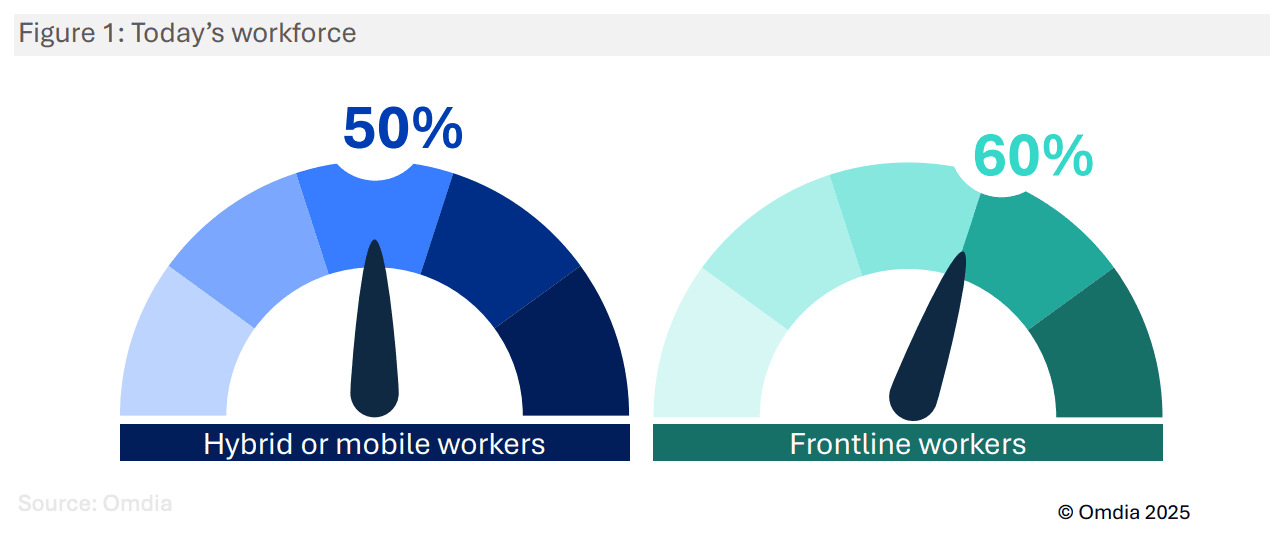
Over the past decade, workplace reality has fundamentally shifted. Omdia research shows that 50% of the typical workforce now operates in hybrid or mobile environments, despite many organizations deploying “return to office” mandates for most of the working week.
Furthermore, approximately 60% of workers are frontline employees who rely primarily on mobile devices, from retail staff to field service technicians.
This is more than a trend: it is a permanent restructuring of how organizations operate, irrespective of size.
This evolution presents a challenge to organizations, not least because the cyber threat landscape continues to evolve at pace. Almost nine out of 10 security decision-makers in 2025 reported to Omdia that security issues have either worsened or remained critically challenging over the past two years.
This is reinforced by Omdia’s security breaches tracker, which in 2024 tracked 7.6 billion breached records—almost one record per human on the planet. Data for the first half of 2025 suggests that number will be exceeded this year.
Security teams protect and serve to support digital resilience
Security teams face a dual mandate to “protect and serve,” safeguarding the organization while enabling daily business operations. Too often, an organization’s security function is referred to as the “Department of No,” perceived as creating barriers that frustrate employees and slow business processes. However, the most effective security functions position themselves as business enablers, finding ways to say “yes, and here's how we can do it securely.”
Likewise, business decision-makers recognize the value of security, with the management of security, identity, and privacy ranked as one of the top three concerns for 41% of organizations globally—the leading issue in Omdia’s IT Enterprise Insights 2025 survey. Furthermore, Omdia’s research also shows digital transformation projects, including the many AI initiatives organizations are undertaking, present ongoing challenges for over half of security functions worldwide.
Many organizations, irrespective of size, face limited budgets, inadequately resourced security teams, and skills shortages, making it difficult to keep pace with evolving threats while supporting business growth and digital transformation initiatives.
Utilizing four pillars of security for a digitally resilient workforce
Protecting today’s workforce requires a comprehensive approach that includes four pillars of modern security: browser protection (as part of endpoint security), credential management, multi-factor authentication (MFA), and identity governance.
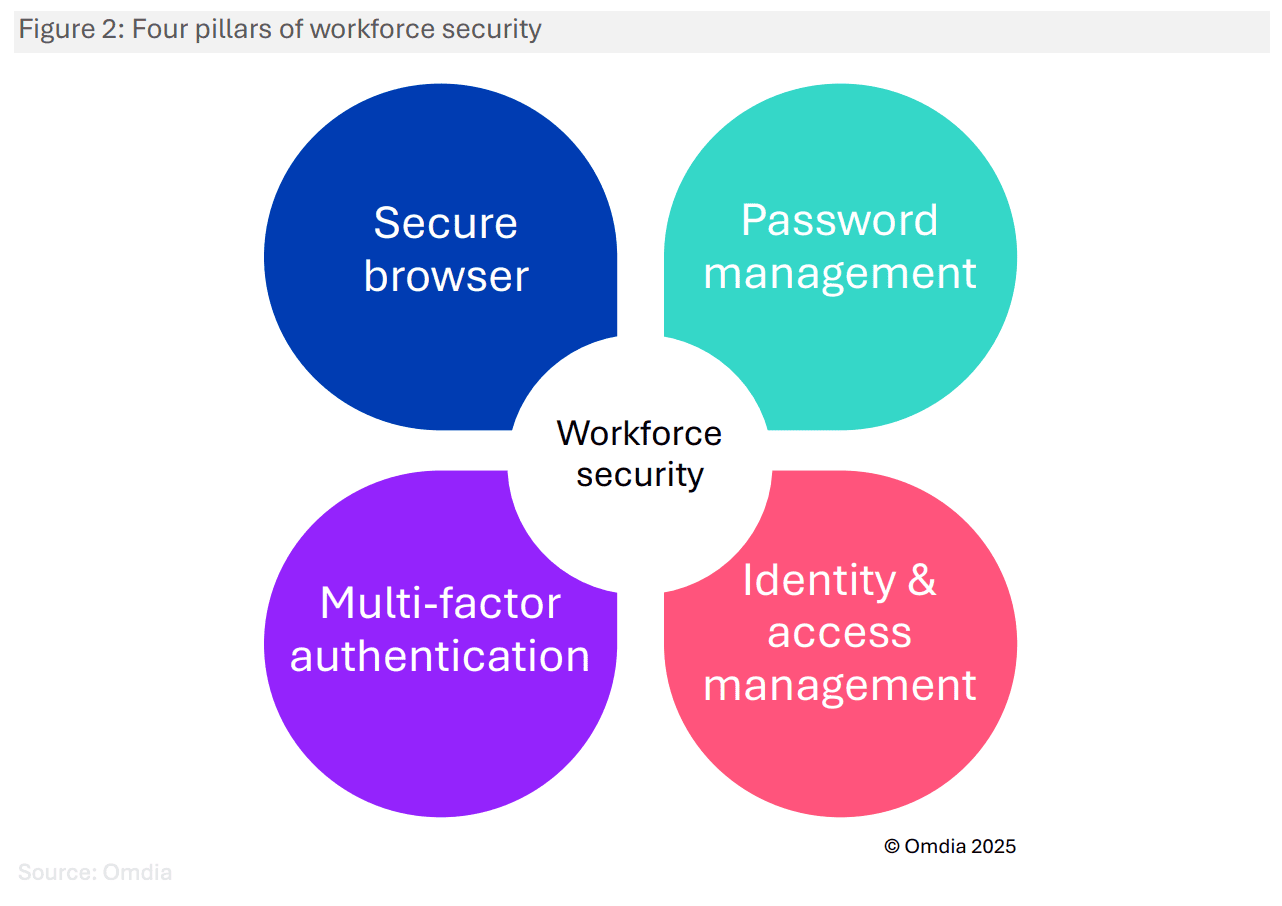
These capabilities work together to deliver a robust security framework that supports the focus of security teams on protecting and serving the organization. Considering each capability in turn:
Secure browser
Secure enterprise browser capabilities, as part of endpoint security, provide granular control over web interactions without sacrificing user experience. Since web browsers serve as the “eyes” of the organization as a major interface with the digital world, they require specialized protection. Organizations should focus on browser security that operates at the application level, targeting the browsing layer where many sensitive interactions occur.
Password management
Passwords are known as a considerable weakness for organizational security. This can be mitigated to a significant extent through organization-driven workforce password management, with centralized and secure authentication credentials. This directly tackles common vulnerabilities such as written-down passwords, credential reuse, and password sharing, and reduces security friction for employees in their day-to-day work.
Multi-factor authentication (MFA)
Multi-factor authentication provides an additional layer of security that is known to deliver major reductions in account takeovers and identity attacks. Modern MFA solutions minimize friction while maximizing protection, using technology such as biometric authentication, card readers, and more. Even if credentials are compromised through phishing or data breaches, attackers face additional barriers before gaining system access.
Identity governance
Identity governance can provide an overarching framework for authorization decisions, enabling consistent policies that align with business requirements and security principles. Identity governance frameworks typically focus on three questions:
Who can access the organization’s resources?
What exactly can they access?
Under what conditions can access occur?
Identity governance and lifecycle management that grants, adjusts, and revokes access at precisely the right times can prevent the accumulation of unnecessary permissions that create security risks.
Conclusion
In support of these pillars, organizations typically develop an implementation strategy that starts with a comprehensive assessment of the mobile workforce’s security posture. Technological controls are generally selected in support of both protection and business enablement.
The goal? Achieving the delicate balance between security, innovation enablement, and operational efficiency: the foundation of true digital and cyber resilience in today's mobile centric business environment.
“Comprehensive security controls require people and processes to be implemented alongside the technology, and effective security should be as frictionless as possible for the employee, whilst simultaneously providing protection for the organization.”
Source: Maxine Holt, Vice President, Enterprise & Channel, Omdia
Comments