Agentic AI in data & analytics: The next evolution of business intelligence

Artificial Intelligence is redefining the way organizations work with data, and business intelligence (BI) is at the center of this transformation. As businesses look beyond dashboards and reports, a new paradigm is emerging: Agentic AI.
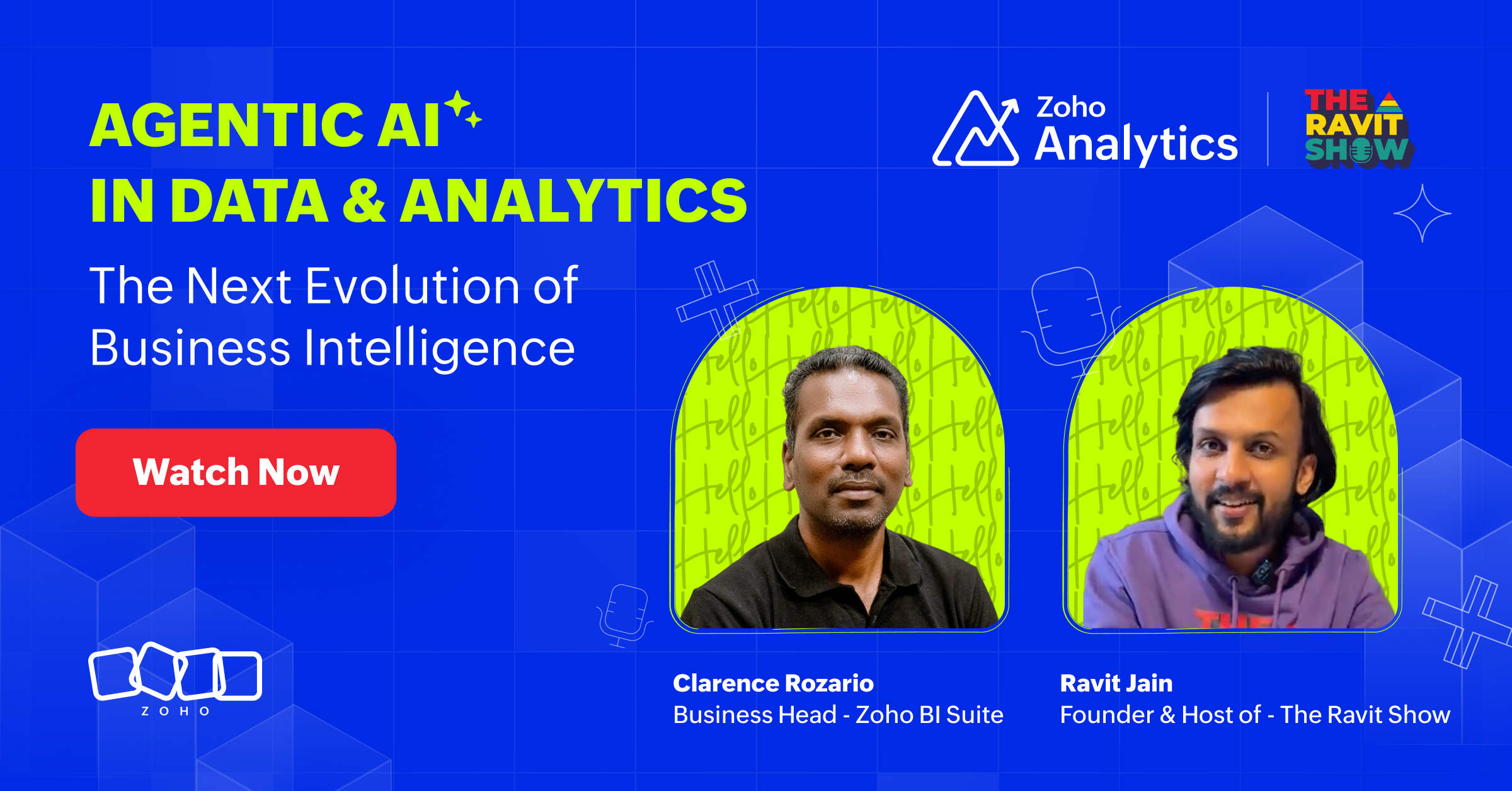
In a recent conversation, Clarence Rozario, Business Head of Zoho BI Suite, joined Ravit Jain on The Ravit Show to discuss how Agentic AI is shaping the future of data and analytics. Their discussion explored how businesses can move from simply understanding data to making faster, smarter, and more impactful decisions.
Watch the full interview here: Link
The evolution of business intelligence
Business intelligence has come a long way over the past two decades. Organizations have progressed from static reports to interactive dashboards and self-service analytics, empowering users to explore data with greater ease.
Today, the next phase of this evolution is Agentic Analytics, where AI acts as an intelligent assistant that not only delivers insights but also helps users identify opportunities, recommend actions, and streamline decision-making.
From insights to outcomes
One of the key themes of the discussion was the changing expectations of modern businesses.
Organizations no longer want analytics platforms that simply explain what happened. They expect solutions that can help answer questions such as:
- What should we do next?
- Which decisions should we prioritize?
- How can repetitive analytical tasks be automated?
Agentic AI helps bridge the gap between data and action by supporting users with contextual recommendations and intelligent automation.
Are dashboards becoming obsolete?
As conversational AI becomes more common, many wonder whether dashboards will become irrelevant.
The answer is no.
Dashboards continue to play a critical role in monitoring business performance and visualizing key metrics. However, the way people consume analytics is evolving. Natural language interactions, AI-powered assistants, and contextual recommendations are complementing traditional dashboards, making analytics more intuitive and accessible for every type of user.
Why context matters
Another important topic discussed was Context Engineering.
AI can only deliver meaningful recommendations when it understands the business context. Factors such as organizational policies, business rules, user roles, and governance help AI generate accurate, reliable, and trustworthy insights.
Without context, AI may provide generic answers. With context, it becomes a powerful decision-support system for the enterprise.
Building the foundation for agentic AI
Successful agentic AI relies on more than advanced AI models. It requires a strong data foundation with unified, trusted, and well-governed information.
A modern analytics platform should bring together data from across the organization, establish consistent business metrics, and provide the context needed for AI to generate reliable recommendations.
Looking ahead
Agentic AI represents the next evolution of business intelligence. As organizations continue to embrace AI, analytics platforms will evolve from delivering insights to supporting decisions and enabling greater business agility.
At Zoho Analytics, we believe the future of analytics lies in combining trusted data, contextual intelligence, and AI-powered capabilities to help businesses make better decisions with confidence.
Comments